Twenty-five things that separate a smooth Jamaica trip from an expensive lesson — paperwork, money, transport, food, safety, and the small habits that save real dollars. One paragraph each, no fluff. Read them in order once, then use the list as a pre-flight checklist the week before you go. Prices and facts checked October 2026.
Heads up: this guide contains affiliate links. If you book through them, we may earn a commission at no extra cost to you — it’s what keeps our guides free.
These tips support our complete Jamaica budget guide — the 5-step system (choose base → set total → pick stay → pick experiences → book in order) that turns this list into an actual trip.
- Complete the C5 immigration form before you fly. It’s free, it’s online, and it saves you a long paper-form queue at Montego Bay airport. US citizens need no visa for tourist stays up to 90 days — just a valid passport, a return ticket, and the C5.
- Enroll in STEP (step.state.gov). The State Department’s Smart Traveler Enrollment Program means the embassy can reach you in an emergency. Free, five minutes, non-negotiable for international travel.
- Get travel insurance — really. Medical care is limited outside major towns, and evacuation coverage is cheap peace of mind. In hurricane season (June–November) it’s not optional.
- Fly into Montego Bay (MBJ) by default. It usually has the most flight options and the lowest fares from the US, plus it’s closest to Negril and the north-coast resorts. Compare fares here — and price Kingston (KIN) too if Port Antonio is your main base.
- Book Tuesday/Wednesday departures. Midweek flights are often dramatically cheaper than Friday and Sunday. Flexible dates are the single biggest airfare lever you control.
- Book tours before you fly, not from the hotel lobby. The same waterfall, lagoon trip, or rafting excursion costs more — or sells out — when booked on arrival. Dunn’s River Falls, the Luminous Lagoon, and Rio Grande rafting are the big three to lock in early.
- Agree every taxi fare before you get in. Every time, no exceptions. This one habit saves more money than any coupon or points hack in Jamaica.
- Carry small JMD bills. You’ll get better prices paying in Jamaican dollars at markets, street stalls, and route taxis — and small bills mean no “no change” problems.
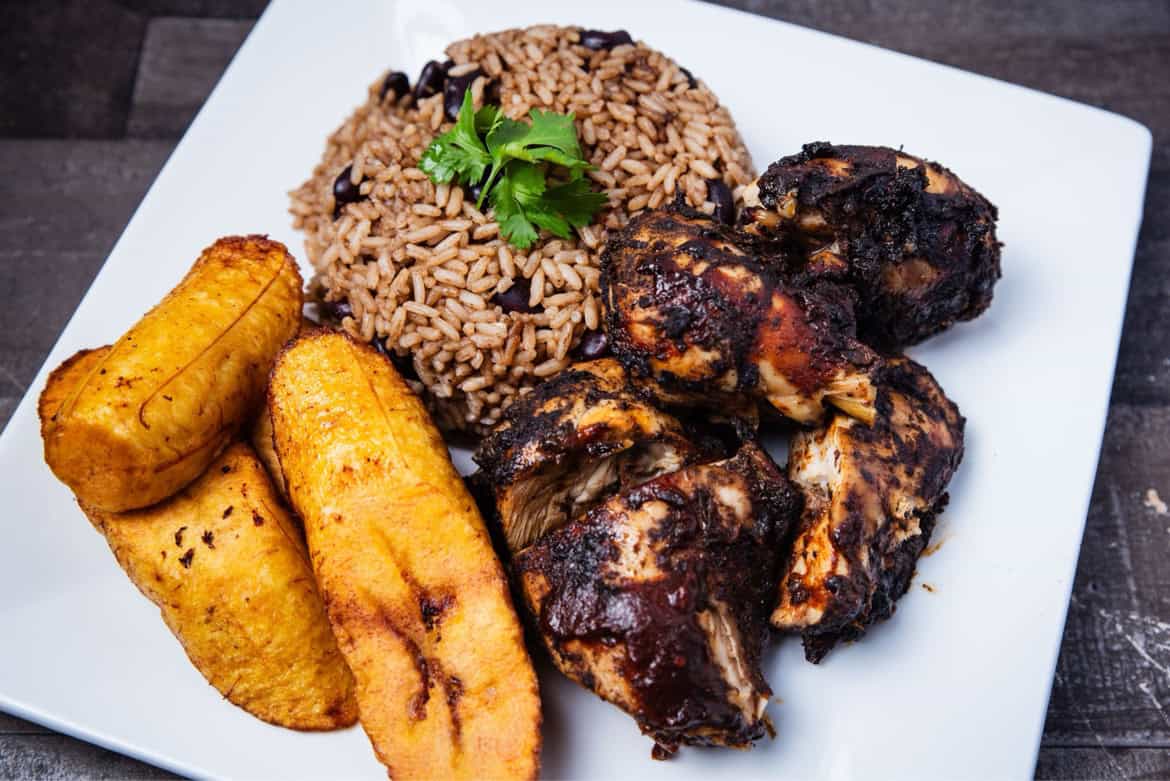
- Cap food at $20–30/day by eating local. Cook shops (oxtail, curry goat, ackee — huge portions, local prices), roadside jerk stands (a few dollars), and patties (a couple of dollars) are the budget trifecta. If the menu is on a whiteboard, you’re in the right place.
- Eat jerk at least once from a real jerk pit. Boston Bay in Portland is jerk’s birthplace — Boston Jerk Centre and Mickey’s Jerk Centre work the pits. Pits vary, so try a couple rather than assuming every one is excellent.
- Drink local. Red Stripe and rum punch at a beach bar beat imported drinks at resort prices every time — and cost a fraction.
- Bring sunscreen from home. It’s expensive on the island. This is the most common “why did I pay that” purchase in Jamaica.
- Drink bottled or treated water outside major resorts. Resorts generally have safe water; everywhere else, don’t risk your trip over tap water.
- Stick to tourist areas after dark. Don’t walk alone at night in unfamiliar areas, use licensed taxis or hotel-arranged transport at night, and keep valuables in your hotel safe. Standard big-city rules, applied.
- Leave flashy jewelry at home. It attracts the wrong kind of attention and you’ll never relax wearing it. A cheap watch and a smile travel better.
- Know hurricane season: June 1–November 30. September–October is the cheapest window and the riskiest — only book it with travel insurance and refundable stays. November is the sweet spot: deals plus settling weather.
- Target shoulder season for value. Late April–June and November deliver the best price-to-weather ratio — thinner crowds, lower rates, and (in spring) the lushest waterfalls.
- Use route taxis for town-to-town hops. ~$1–2/person per route on set routes — the cheapest way to move around once you’re settled. Ask your guesthouse host which ones to take.
- Take the Knutsford Express between major towns. Comfortable coaches serving Montego Bay, Ocho Rios, Kingston, Negril, and Port Antonio. Never rely on printed departure times — always check knutsfordexpress.com for the current schedule.
- Remember: driving is on the left. Roads can be rough outside the highways and local driving is assertive. Rental cars are for confident drivers only — everyone else should use transfers, route taxis, and excursion pickups (which usually include hotel pickup).
- Haggle politely — it’s expected. At craft markets, with beach vendors, and on excursion extras, the first price is never the price. Smile, counter reasonably, and nobody’s feelings get hurt.
- Stock up at markets, not resort gift shops. Mangoes, pineapples, and bananas cost pennies at local markets versus resort prices. Same fruit, tenth of the price.
- Price transfers WITH your stay, not after. A cheap room far from the airport plus a $135–300+ private transfer (Port Antonio, we’re looking at you) isn’t a cheap room. Run the combined number in the budget builder before you commit.
- Don’t day-trip across the island. Dunn’s River Falls is ~3 hrs each way from Negril; Ocho Rios attractions are 2.5+ hrs from Port Antonio. Base choice IS an excursion decision — pick the base near your must-dos.
- Book in this order: flights → refundable stay → must-do tour → transfer → paperwork. Flights before stays (fare sales are unpredictable), refundable before final (a better deal might appear), tours before arrival (lobby prices are the worst deal on the island). The full sequence: book Jamaica in the right order.
One for the fun list: Jamaica doubles as a film set, and several famous movie locations here are places you can actually visit.
Your next step: book in the right order — start with the complete Jamaica budget guide, then grab the free Blueprint below and plan with real prices beside you.
Turn tips into a trip
Tips are only useful inside a plan. The complete Jamaica budget guide is the plan: choose your base in 60 seconds, set your total with real numbers, pick experiences tagged by base and book-ahead urgency, and book everything in the order that saves money. Twenty-five tips memorized is trivia — five steps followed is a vacation.
Is Jamaica safe for tourists in 2026?
The tourist corridors (Negril, Montego Bay’s Hip Strip and Ironshore, Ocho Rios) are well-patrolled and millions visit without incident. Use the same street smarts you’d use in any unfamiliar city: don’t flash cash, agree taxi fares upfront, and stick to known areas after dark.
What currency should I bring to Jamaica?
US dollars are accepted nearly everywhere in tourist areas, often at a fair-enough rate. For the best value, pay in Jamaican dollars at local spots — withdraw from ATMs rather than exchanging at the airport, where rates are worst.
Do I need a visa to visit Jamaica?
US, UK, Canadian, and most EU citizens don’t need a visa for tourist stays up to 90 days — just a passport valid for the duration of your trip. Check current entry requirements before you fly, as rules can change.
Is the tap water safe to drink in Jamaica?
In most tourist areas and resorts, yes. In rural areas or small guesthouses, stick to bottled water to be safe — it’s cheap and everywhere.

Leave a Reply